Kus-Kus-Sum Restoration
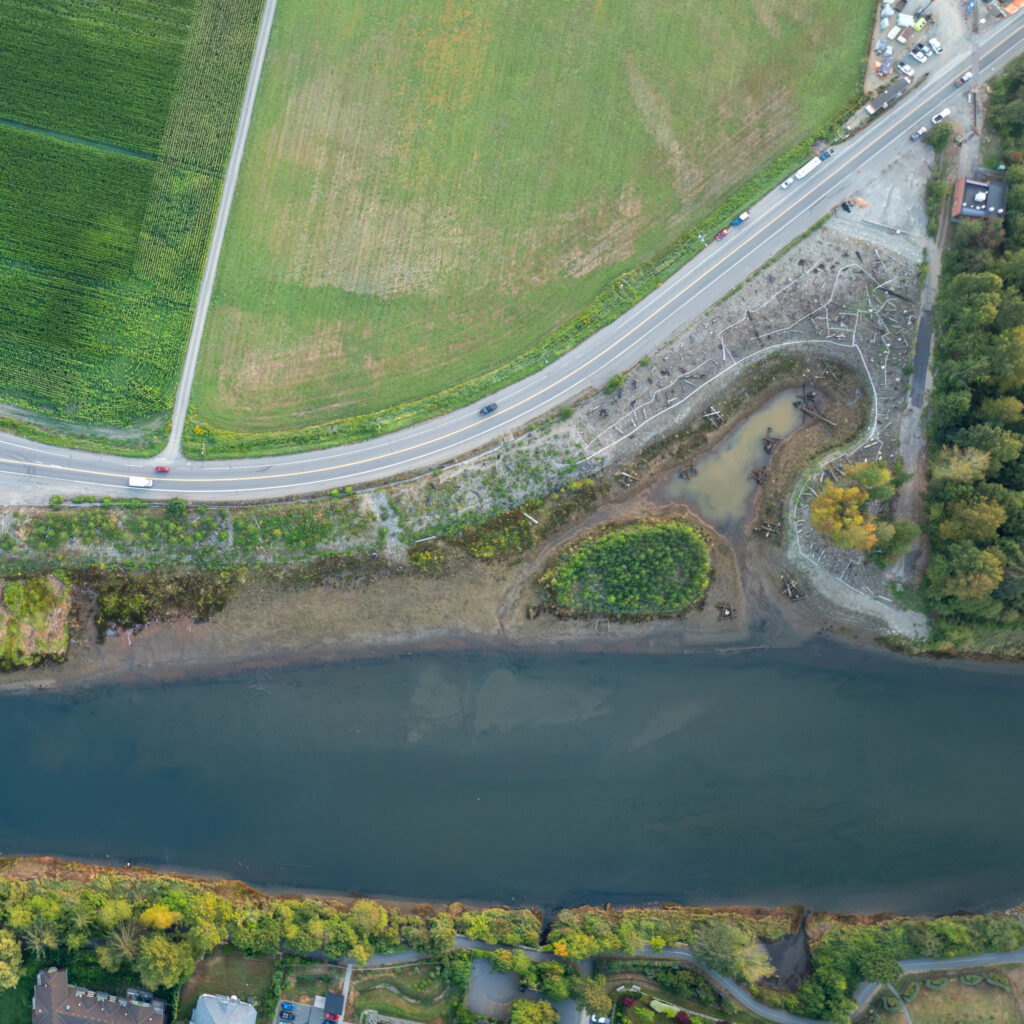
Located on the Courtenay River at the mouth of the K’ómoks Estuary within the unceded territory of the K’ómoks Nation, Kus-Kus-Sum is a culturally and ecologically significant site situated along an important salmon migration corridor formed by the Courtenay, Puntledge, and Tsolum rivers. Following the closure of the Fields Sawmill in 2004 and subsequent site remediation, the property remained largely covered by concrete and asphalt, with the riverbank confined by steel sheet piles and limited ecological function. Recognizing the opportunity to restore estuarine processes and habitat values, Comox Valley Project Watershed Society, working on behalf of and in partnership with the K’ómoks First Nation and the City of Courtenay, initiated a comprehensive restoration program to transform the former industrial site into a functioning natural ecosystem.
Comox Valley Project Watershed Society
Estuaries & Coasts
Courtenay, British Columbia
Since 2016, NHC has collaborated with Comox Valley Project Watershed Society to advance the planning, design, and implementation of the restoration. NHC provided project planning support, subsurface and topographic investigations, numerical modelling of riverine and tidal processes, geomorphic assessment, hydrotechnical design, CAD drafting, and construction cost estimating. The restoration design included removal of existing pavement and structures, extraction and salvage of the steel sheet pile wall, bulk excavation and grading, and revegetation using native plant species.
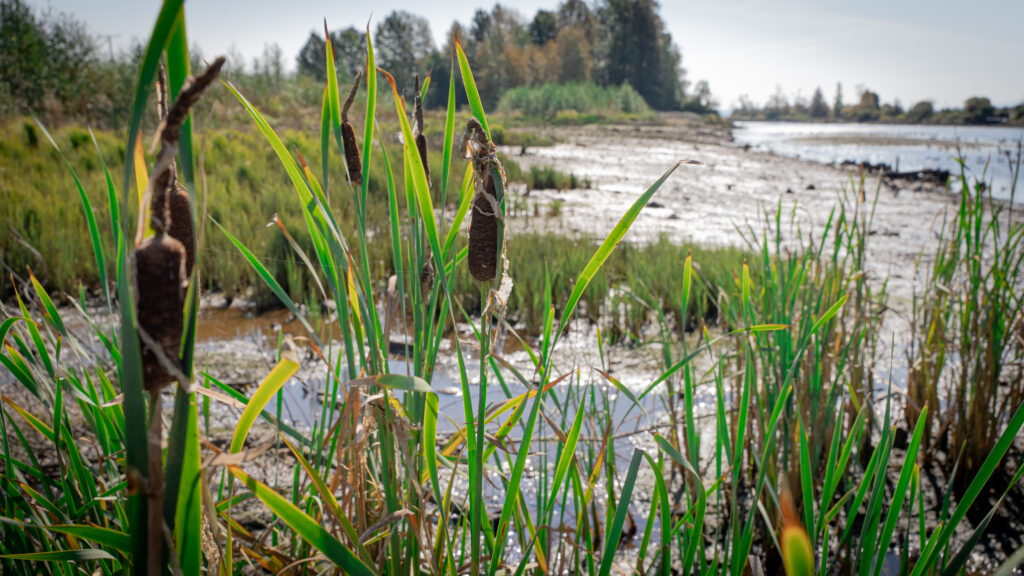
NHC also provided construction contract administration, field reviews, and construction oversight during implementation; construction was completed in February 2026. The completed restoration established intertidal saltmarsh benches, side-channel salmon habitat with large woody debris habitat features, upland islands and planting areas, dendritic drainage channels, and improved connectivity with adjacent estuarine habitats.
Transformed a former industrial brownfield into a thriving estuarine ecosystem that enhances salmon habitat, restores natural coastal processes, strengthens climate resilience, and supports the cultural and ecological values of the K’ómoks Estuary.