Tapajós River Basin Climate Change and Hydropower Assessment
The Tapajós River Basin, one of the largest tributary systems of the Amazon River, is the focus of several proposed hydroelectric developments. Spanning approximately 500,000 km² across diverse climatic regions, landscapes, and ecosystems, the basin presents unique challenges for understanding how future environmental changes may affect water resources and hydropower generation.
The Nature Conservancy of Brazil
Climate & Watersheds
Brazil
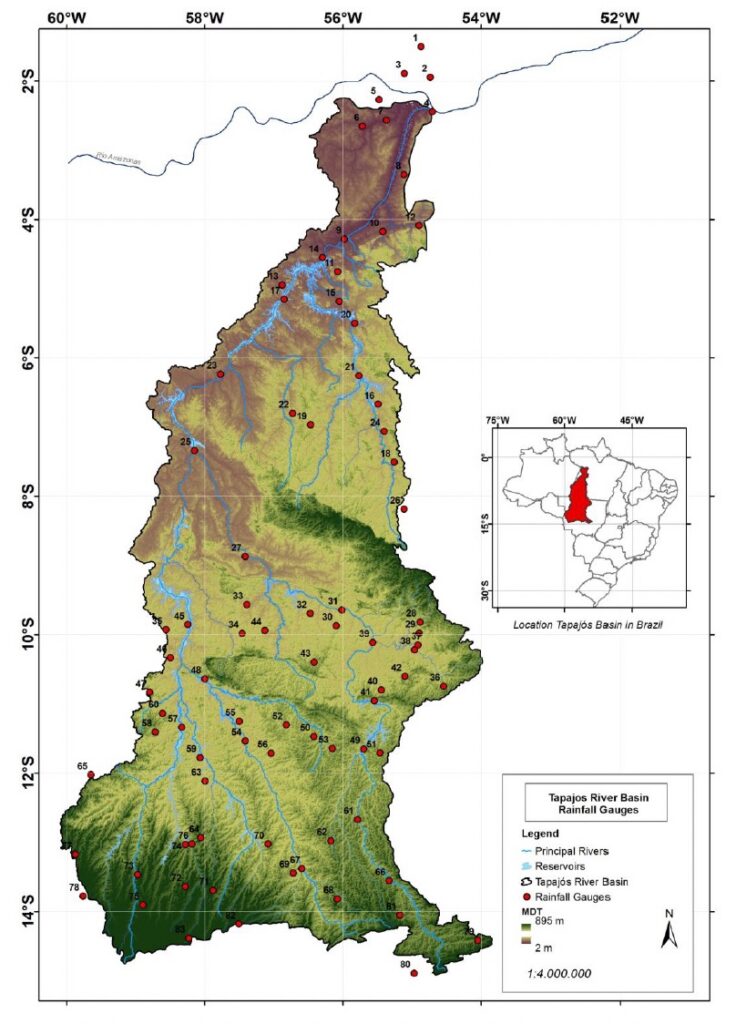
The Nature Conservancy of Brazil retained NHC to evaluate the potential impacts of climate change and deforestation on river flows at proposed hydropower sites throughout the basin. The study aimed to provide a scientific foundation for long-term water resource planning and sustainable infrastructure development in the region.
NHC developed and calibrated a basin-wide hydrologic model using the Variable Infiltration Capacity modelling platform. The analysis incorporated climate projections consistent with those used by Brazil’s National Institute for Space Research, allowing the assessment of future streamflow conditions under multiple climate scenarios.
The study examined how changes in precipitation, temperature, and land cover could influence runoff and river flows throughout the watershed. Results showed that while rising temperatures increased evapotranspiration across the basin, changes in precipitation had the greatest influence on streamflow. Simulations demonstrated that relatively modest changes in future precipitation could result in significantly larger changes in river discharge, highlighting the sensitivity of hydropower production and water resources to future climate conditions.
Provided decision-makers with a science-based understanding of how climate change and deforestation may affect future water availability, supporting more resilient hydropower planning, environmental stewardship, and sustainable watershed management in the Amazon region.